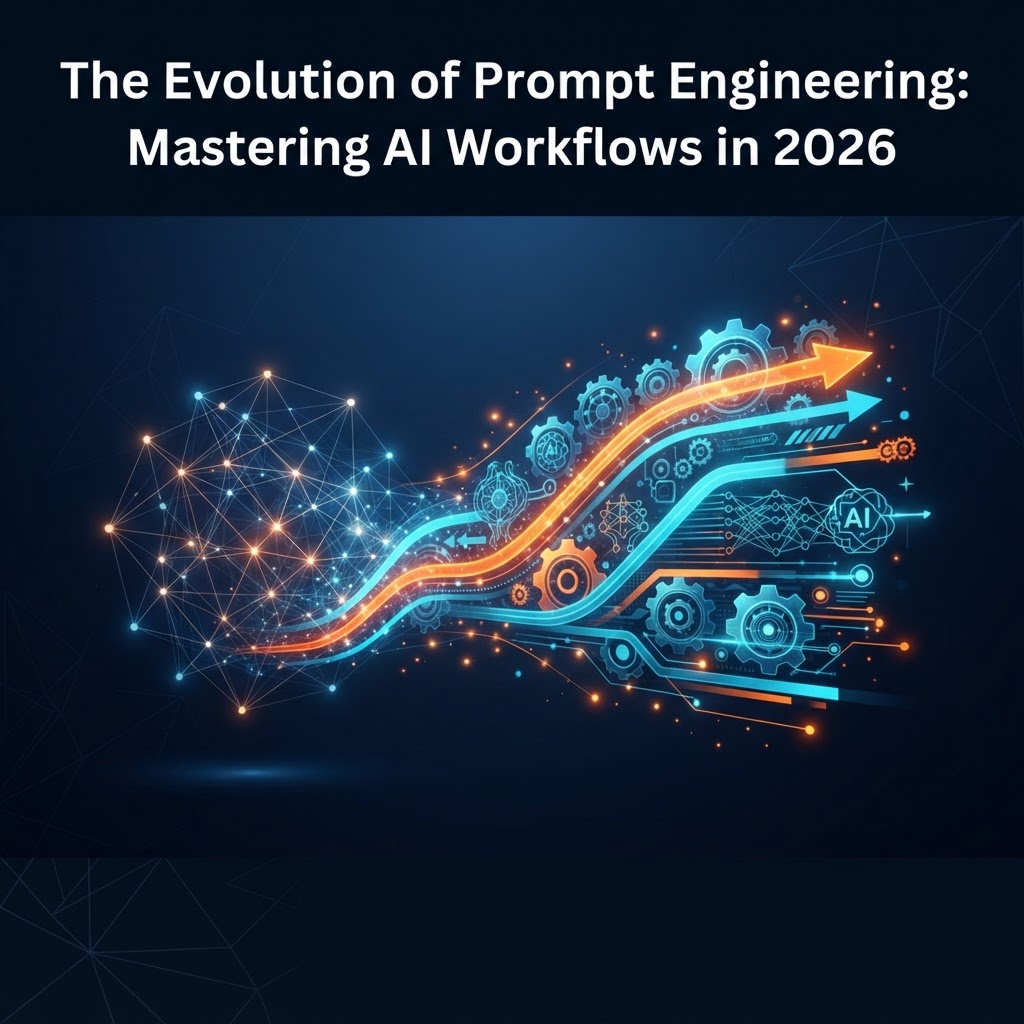
The Evolution of Prompt Engineering: Mastering AI Workflows in 2026
Prompt engineering has evolved from simple instruction-typing into a sophisticated discipline focused on context engineering and systematic workflows. This guide explores the latest trends and best practices for professionals looking to maximize AI performance in 2026.
CodeDexters Academy AI
The New Era of Prompt Engineering
Prompt engineering is no longer just about typing clever instructions into a chatbot. As we move through 2026, the field has matured into a critical professional skill set, shifting from basic input design to complex 'context engineering' and systematic workflow integration [2, 10]. For business leaders, developers, and domain experts, understanding these shifts is essential to maintaining a competitive edge.
From Simple Prompts to Context Engineering
In the early days of LLMs, success was often measured by how well a user could 'trick' a model into a desired output. Today, the focus has shifted toward reliability and structural integrity. Modern prompt engineering emphasizes providing the model with sufficient context, clear constraints, and iterative refinement [4, 7].
Recent industry developments highlight this transition:
- Context Engineering: Rather than relying on single-shot prompts, professionals are now building robust context windows that guide the model through specific organizational rules and data parameters [10].
- Systematic Testing: Leading organizations are moving away from ad-hoc prompting toward testing changes systematically to ensure consistent performance across enterprise applications [3, 6].
- Security-First Design: With the rise of prompt injection risks, new 'lockdown' modes and security-focused prompting techniques have become standard for protecting sensitive data [8].
Why Professionals Must Adapt
Whether you are in HR, Sales, or Finance, the ability to communicate effectively with AI is becoming as fundamental as using a spreadsheet. The latest research from industry leaders like Anthropic and OpenAI suggests that the most effective prompts are those that treat the AI as a collaborative partner rather than a search engine [3, 5].
For instance, developers are increasingly using structured formats like YAML to define specifications, reducing 'AI psychosis' and ensuring the model adheres to strict technical requirements [8]. Meanwhile, HR and Marketing professionals are leveraging reusable prompt libraries to maintain brand voice and compliance across automated workflows [1, 9].
Best Practices for 2026
To stay ahead, professionals should adopt these core strategies:
- Iterative Refinement: Never settle for the first output. Use the model's response to refine your instructions, adding more context or clarifying constraints [4].
- Split Complex Tasks: Break down large projects into smaller, manageable subtasks. This 'chain-of-thought' approach significantly improves accuracy for complex reasoning [3].
- Leverage External Tools: Modern AI is most powerful when it can access external data or execute code. Learn to prompt the model to use these tools effectively [3].
Conclusion
Prompt engineering in 2026 is about precision, security, and integration. By moving beyond basic inputs and embracing systematic context engineering, professionals can unlock the full potential of AI. At CodeDexters AI Professional Academy, we encourage you to view prompt engineering not as a static task, but as an evolving language of efficiency that will define the future of work.
Ready to master these techniques? Start by auditing your current AI workflows and implementing the iterative strategies outlined above.
Found this article helpful? Share it with your network:
Related Articles
Explore Your Certification Pathway
Book a consultation with a certification advisor to confirm the right pathway for your role, goals and Early-Bird eligibility.