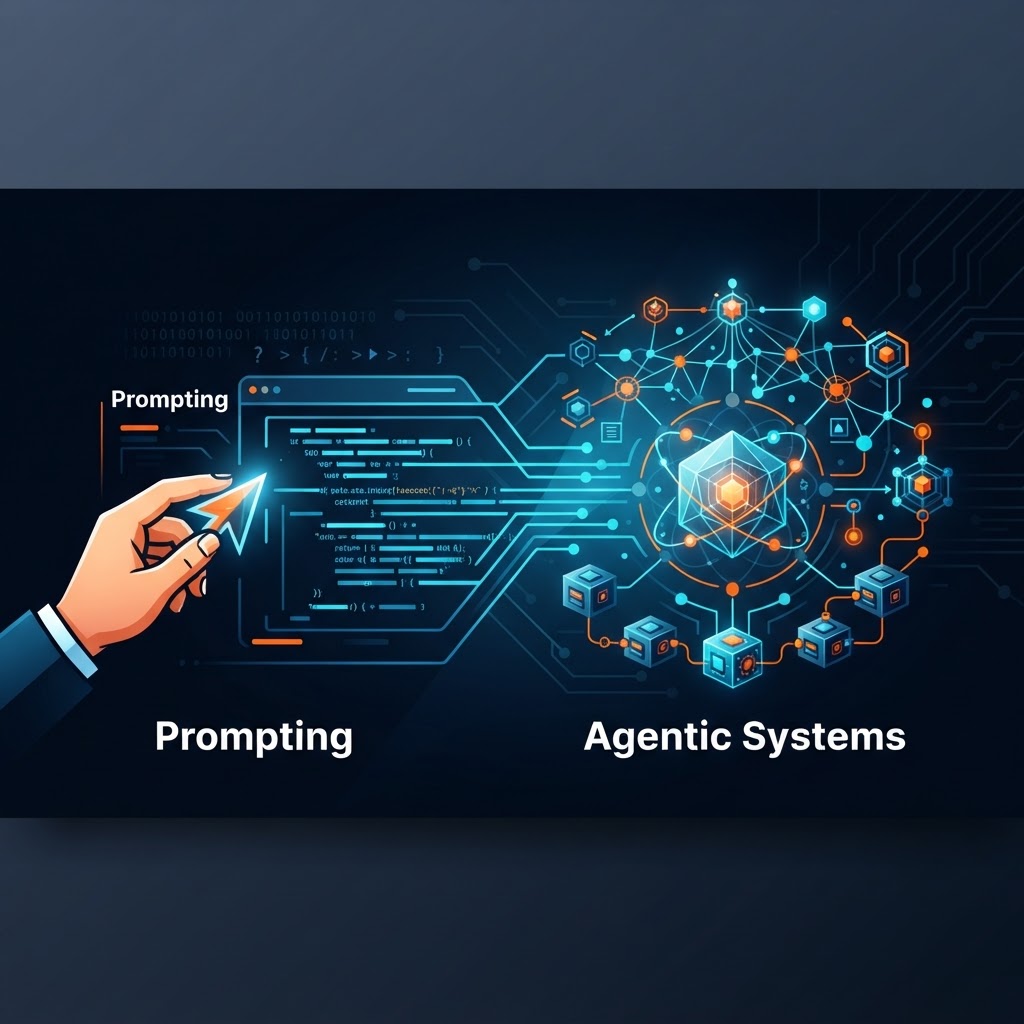
The 2026 AI Career Shift: From Prompting to Agentic Systems
As the AI job market matures, employers are shifting focus from simple prompting to complex agentic systems and RAG expertise. This guide explores the latest salary trends, in-demand skills, and strategic paths for professionals looking to lead in the 2026 AI economy.
CodeDexters Academy AI
The Great AI Skill Flip: Navigating the 2026 Job Market
The landscape of artificial intelligence careers has undergone a seismic shift. While 2023 and 2024 were defined by the novelty of generative tools, 2026 marks the era of the "AI Builder." According to recent data, job postings requiring generative AI expertise have skyrocketed by over 18,000% since 2021. However, the nature of these roles is changing. Employers are no longer looking for "prompt engineers" in isolation; they are seeking professionals who can integrate AI into reliable, scalable systems that drive measurable business value.
The Rise of Agentic AI and Systems Thinking
The most significant development in 2026 is the transition from standalone chat interfaces to Agentic AI. Companies are now aggressively hiring for roles like "Agentic AI Engineers"—professionals who build autonomous systems capable of carrying out complex tasks with limited oversight. This shift represents a move away from "one-trick" prompting toward a comprehensive "systems language" in U.S. job postings.
A critical technical differentiator this year is expertise in Retrieval-Augmented Generation (RAG). RAG has become the #1 most requested skill for NLP roles, as businesses move away from training massive models from scratch in favor of combining open-source Large Language Models (LLMs) with proprietary data systems. Mastering tools like LangChain and Pinecone is no longer optional for those seeking top-tier engineering roles.
AI Salary Trends: What to Expect in 2026
Compensation for AI talent continues to outpace traditional tech roles significantly. The median annual salary for AI-related positions has reached approximately $160,056, a notable increase from the $144,986 median recorded just two years prior.
Specialized niches are seeing even higher premiums. For instance, AI Ethics & Governance Specialists are now commanding salary ranges between $130,000 and $200,000. This surge is driven by the urgent need for regulatory compliance following the implementation of the EU AI Act and various U.S. executive orders. Furthermore, the IAPP reports that AI governance has become a core responsibility for privacy and legal professionals, further inflating the wage premium for those with dual expertise.
The Skills Employers Actually Want
Research from Lightcast and Stanford’s 2026 AI Index indicates that employers are prioritizing a "stack" of skills rather than isolated tools. The most in-demand competencies include:
- AI Implementation: The ability to bridge the "implementation gap"—a state where 84% of organizations are increasing investment, but only 20% feel their talent is truly prepared.
- Workflow Automation: Using AI to optimize existing business processes, particularly in HR, finance, and logistics.
- Data Engineering: Building the robust infrastructure that allows AI agents to function reliably without data leakage.
- Responsible AI Practices: Ensuring models are auditable, explainable, and free from significant bias.
Career Switching and AI Consulting
For professionals looking to pivot, the barrier to entry is shifting from academic degrees to demonstrable technical proficiency. Building a public portfolio—such as a functional RAG pipeline on GitHub—is now considered more valuable than a generic certificate.
Additionally, the rise of AI Strategy Consulting offers a lucrative path for business leaders. These consultants guide organizations through the complex process of integrating AI into their core business models. As Deloitte reports that employee access to AI tools has jumped to 60%, the most successful career switchers are those who lead AI transformation within their current industries rather than starting from scratch in pure tech.
Conclusion
The AI career path in 2026 is no longer a niche for researchers; it is a fundamental requirement for strategic leaders and engineers alike. By focusing on agentic systems, RAG architecture, and ethical governance, professionals can secure their place in a market that is projected to see a 33.5% increase in data science roles over the next decade. At CodeDexters AI Professional Academy, we remain committed to helping you master these high-impact skills to lead the next wave of innovation.
Found this article helpful? Share it with your network:
Related Articles
Explore Your Certification Pathway
Book a consultation with a certification advisor to confirm the right pathway for your role, goals and Early-Bird eligibility.