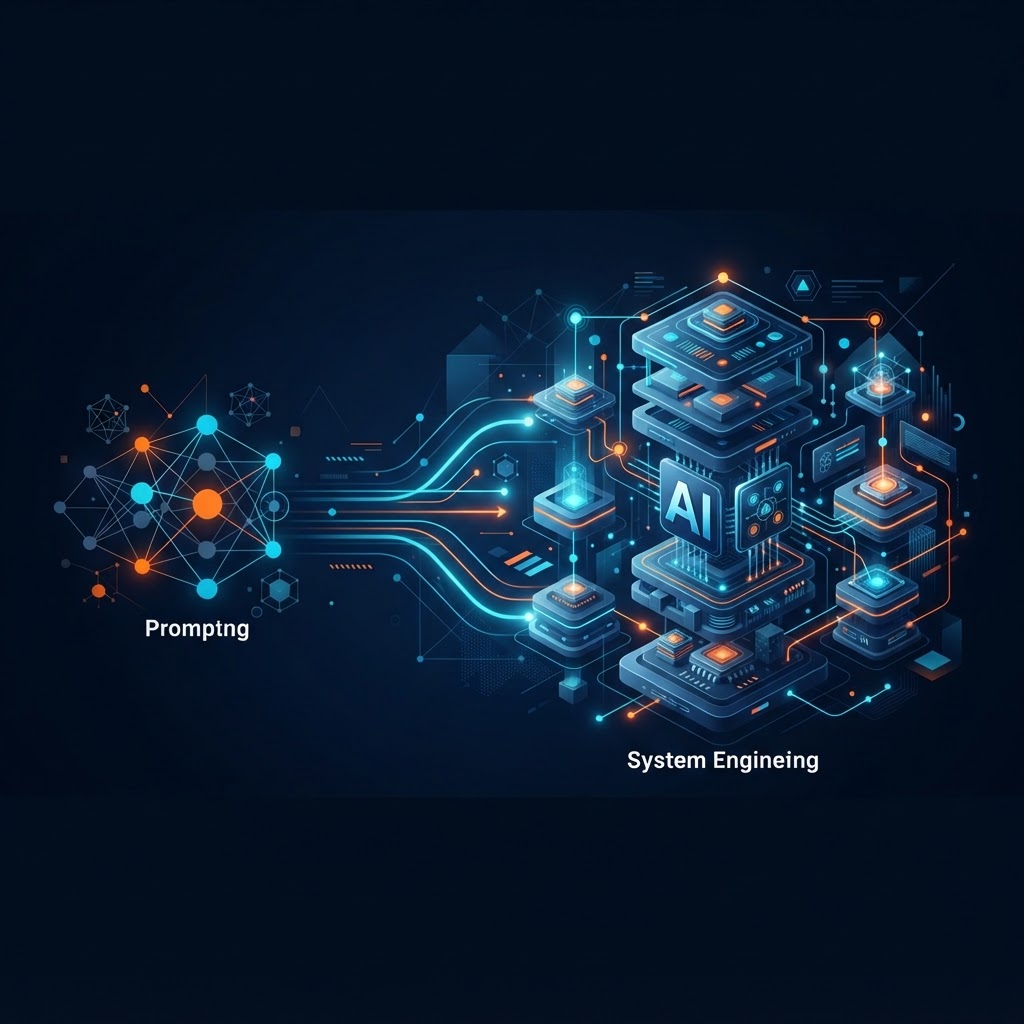
The 2026 AI Career Shift: Moving Beyond Prompting to System Engineering
As AI adoption matures, employers are shifting their focus from basic AI literacy to advanced system engineering and operational reliability. This guide explores the evolving skill sets required to stay competitive in the 2026 job market.
CodeDexters Academy AI
The Evolution of AI Careers in 2026
The narrative surrounding AI careers has undergone a significant transformation. In the early days of the generative AI boom, the market was obsessed with "prompt engineering" and finding the next "AI-only" job title. However, as we move through 2026, the reality of the workplace has shifted. Employers are no longer just looking for people who can talk to a chatbot; they are hunting for professionals who can integrate AI into robust, reliable, and scalable business systems Source: Open Data Science.
From Prompting to System Reliability
While AI literacy remains a baseline expectation, the premium is now placed on "operational discipline." According to recent industry analysis, the most sought-after candidates are those who can turn AI models into dependable tools Source: Open Data Science. This means moving beyond simple API wrappers toward:
- Agentic AI Development: Building autonomous systems that can execute complex workflows Source: ExplainX.
- Evaluation & Governance: Ensuring AI outputs are accurate, secure, and compliant with frameworks like the EU AI Act Source: Open Data Science.
- Data Infrastructure: Managing the pipelines that feed high-quality data into AI models Source: Open Data Science.
The Skills Gap: Perception vs. Reality
There is a growing disconnect between job seekers and hiring managers. A recent survey found that while 93% of job seekers believe they possess the necessary AI skills, employers are struggling to find candidates with the advanced proficiency required to solve real-world business problems Source: Open Data Science.
Employers are increasingly rewriting job descriptions to prioritize:
- Software Engineering Fundamentals: Python, data science, and cloud infrastructure remain the bedrock of AI roles Source: Open Data Science.
- Domain Expertise: The ability to apply AI within specific workflows—such as marketing, finance, or project management—is more valuable than generic AI knowledge Source: Bernard Marr.
- Human-Centric Skills: As AI handles routine tasks, employers are doubling down on emotional intelligence, resilience, and leadership—qualities that AI cannot replicate Source: World Economic Forum.
Preparing for the Future
If you are looking to pivot into AI or advance your current career, the strategy is clear: stop panic-collecting certifications and start building demonstrated capabilities. Focus on projects that involve deploying, measuring, and maintaining AI systems. Whether you are an aspiring AI engineer or a business leader, the goal is to move up the value chain by becoming an architect of reliable AI solutions rather than just an operator of AI tools.
Conclusion
The AI career landscape is not shrinking; it is maturing. By focusing on the intersection of technical rigor and human-centric leadership, professionals can secure their place in the future of work. At CodeDexters AI Professional Academy, we emphasize that the most successful careers in 2026 will be built by those who treat AI as a foundational layer for solving complex, high-stakes business challenges.
Found this article helpful? Share it with your network:
Related Articles
Explore Your Certification Pathway
Book a consultation with a certification advisor to confirm the right pathway for your role, goals and Early-Bird eligibility.