Rise of Agentic AI: How Autonomous Agents Redefine Enterprise Learning
AI education is undergoing a major shift from passive conversational LLMs to dynamic, multi-step AI agents. Learn how breakthroughs in agentic workflows, role-based simulation, and enterprise orchestration are transforming modern technical training and professional development.
CodeDexters Academy AI
The Shift from Static Prompts to Autonomous AI Agents
For the past few years, organizational adoption of artificial intelligence has centered largely on generative text completion and conversational chatbots. However, the paradigm is rapidly evolving. According to industry analyses tracking frontier models and enterprise deployments highlighted by Turing, the focus has decisively shifted from general-purpose Large Language Models (LLMs) to autonomous, task-oriented AI Agents.
Rather than passively answering single-turn prompts, agentic workflows enable systems to plan, retrieve live contextual data, call external tools, and execute end-to-end tasks with minimal human intervention. For technical leaders and corporate learning centres, this transition marks a turning point: AI is moving from an assistant to an active operational collaborator.
Transforming Professional Training: The Role-Play Simulator
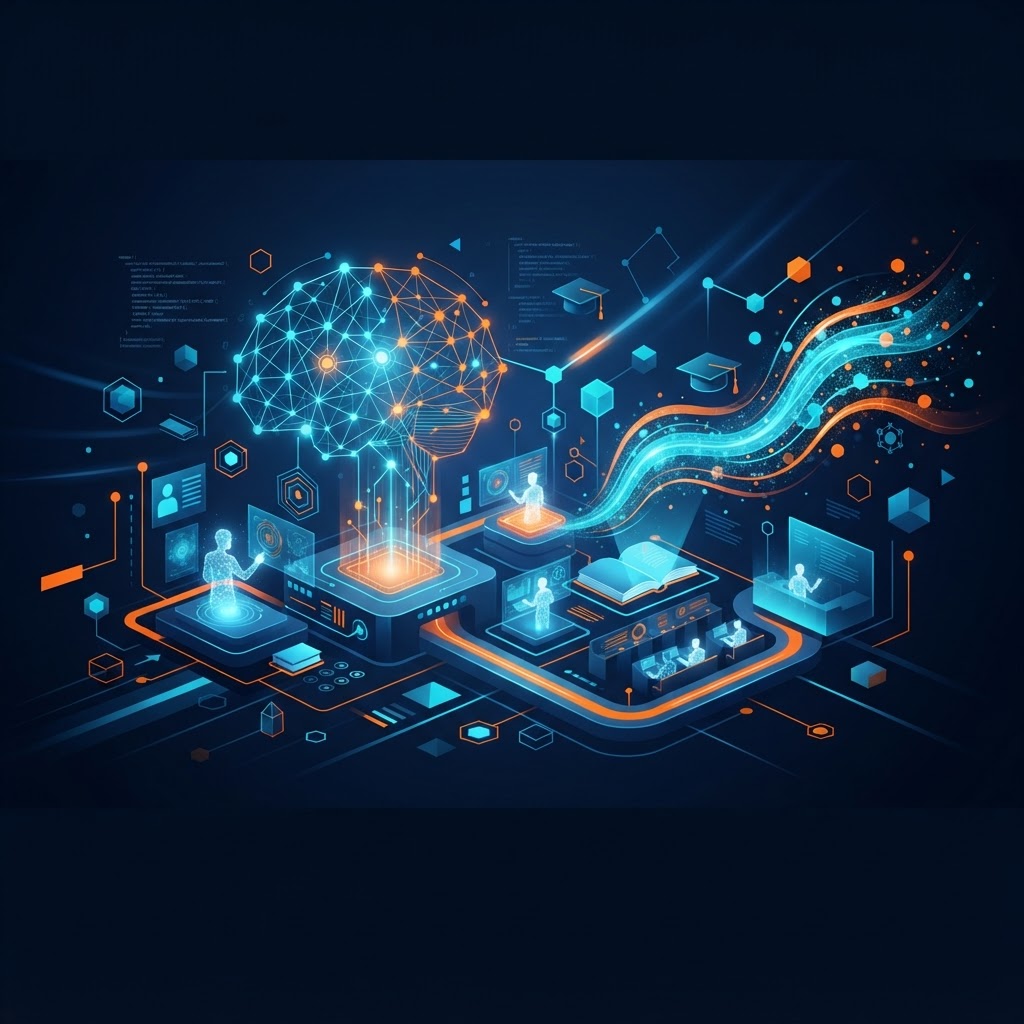
One of the most consequential developments in practical AI learning environments is the implementation of agentic role-players. Recent breakthroughs demonstrate that agentic models are excelling as specialized scenario simulators. For example, medical educators at Dartmouth developed an AI Patient Actor that simulates realistic patients, enabling practitioners to hone communication and interpersonal skills with dynamic, real-time feedback.
This shift showcases how modern AI learning centres can move beyond multiple-choice evaluations and rigid scripts:
- Dynamic Persona Simulation: Agents maintain coherent behavioral constraints, reacting fluidly to user decisions during simulations.
- Safe-to-Fail Sandboxes: Learners can experiment with crisis management, code debugging, or client negotiations without business risk.
- Automated Formative Feedback: Agents break down user responses against predefined rubrics, delivering structured takeaways immediately after training sessions.
Enterprise Scale: From Pilot Projects to Organization-Wide Rollouts
Agentic systems are no longer confined to academic experiments. Enterprise adoption has accelerated substantially:
- Workforce-Wide Deployment: Tech leaders like Cisco have expanded custom agent platforms like "MyAgent" to workforces numbering 90,000 employees, tailoring context to role, team activity, and internal repositories as reported in recent AI Agents industry reporting.
- Specialized Security & Operations Agents: Providers such as Proofpoint and CrowdStrike are shipping dedicated agentic workflows (e.g., automated SOC analyst agents) that translate complex queries into structured investigation runbooks.
- Orchestration Platforms: Major technology providers like Oracle are integrating generative AI agents directly into customer experience stacks, highlighting the need for professionals to master agent governance and integration pipelines.
Why Responsible AI and Human-in-the-Loop Are Non-Negotiable
With increased autonomy comes significant operational responsibility. As agent architectures become capable of querying databases, invoking APIs, and generating synthetic assets, establishing strong guardrails is paramount.
Enterprise AI learning frameworks now heavily emphasize Responsible AI practices:
- Human-in-the-Loop (HITL) Controls: Ensuring high-consequence operations (such as security actions or diagnostic decisions) retain mandatory human approval.
- Retrieval-Augmented Verification: Augmenting agent memory with Retrieval-Augmented Generation (RAG) and factual grounding to curb hallucinations.
- Auditability and Traceability: Monitoring agent-to-agent communication logs to guarantee explainability and compliance with emerging regulatory standards.
Preparing Your Career for the Agentic Era
For software engineers, data professionals, and business executives, the message is clear: mastering foundational AI concepts is only the starting point. Staying competitive requires understanding the orchestration layer—how LLMs interface with tools, memory stores, and evaluation frameworks to drive real-world outcomes.
At CodeDexters AI Professional Academy, we prepare professionals to lead this transition through hands-on tracks in Agentic AI design, prompt orchestration, and production-grade governance. Upskill today to transition from prompting AI to architecting the intelligent agent systems of tomorrow.
Found this article helpful? Share it with your network:
Related Articles
Explore Your Certification Pathway
Book a consultation with a certification advisor to confirm the right pathway for your role, goals and Early-Bird eligibility.