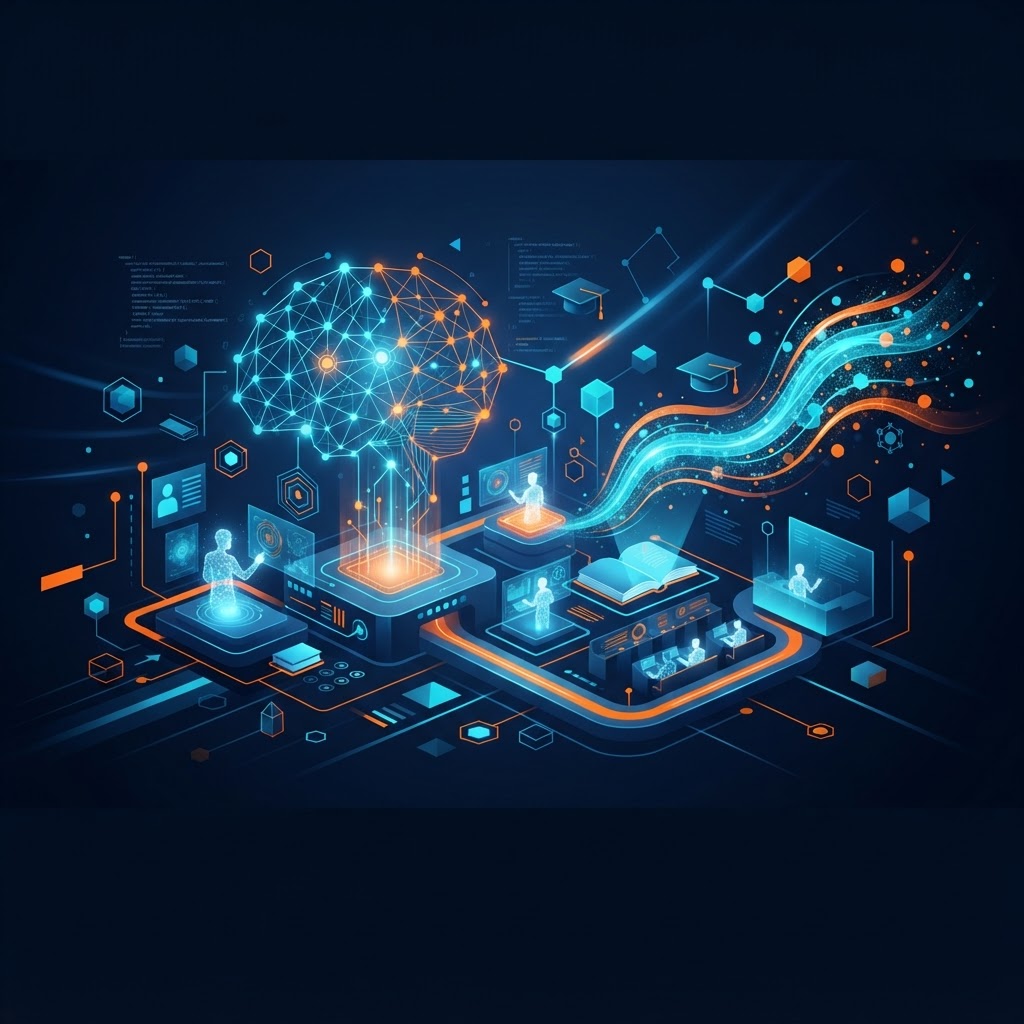
The Future of AI Learning: How Generative AI is Reshaping Education
Discover how generative AI is transforming the educational landscape through personalized learning, AI-driven coaching, and adaptive platforms. Explore the latest trends in AI integration for students and professionals alike.
CodeDexters Academy AI
The AI Revolution in Education: Beyond the Hype
The integration of artificial intelligence into education has moved far beyond experimental chatbots. As we navigate the current landscape, AI is becoming a foundational element of how we acquire skills and manage professional development. According to recent industry reports, 86% of education organizations now report using generative AI, marking the highest adoption rate across any sector [3].
Personalized Learning and AI Agents
One of the most significant shifts is the move toward proactive, intelligent learning environments. Modern platforms are no longer just repositories of information; they are becoming interactive partners. For instance, tools like Coursera Coach provide learners with a virtual partner that understands the context of their specific journey, offering guidance without simply providing answers [2]. This shift toward 'agentic' AI—systems that can perform tasks and engage in Socratic dialogue—is fundamentally changing how students and professionals master complex subjects [2, 6].
The Evolution of AI Intelligence in Education
Recent research highlights a six-level evolution path for AI in education, moving from basic digital tools to full-scenario intelligent agents [7]. We are currently seeing a transition from:
- Level 0-1: Basic digital content and automated administrative tasks.
- Level 2: Context-aware systems that analyze learning behaviors to adjust difficulty dynamically [7].
- Level 3: Simulated interaction stages where AI agents provide human-like, Socratic instruction [2, 7].
Strategic Implementation for Professionals
For business leaders and professionals, the focus is shifting from merely adopting AI to ensuring its responsible and effective use. As organizations integrate these technologies, they must prioritize:
- Data Privacy and Security: With the education sector being a frequent target for cyber threats, robust infrastructure is non-negotiable [3].
- Human-in-the-loop Oversight: AI utility is elevated when combined with human expertise, ensuring accuracy in curriculum creation and skill assessment [5].
- Upskilling the Workforce: There is a critical shortage of skilled data scientists and engineers. Organizations that invest in upskilling their teams to understand RAG (Retrieval-Augmented Generation), LLMs, and agentic workflows will gain a significant competitive advantage [6].
Conclusion
As we look toward the future, the synergy between traditional learning and AI-driven innovation will define success. Whether through AI-assisted course building or personalized learning paths, the goal remains the same: to empower learners to meet the demands of an AI-transformed job market. By embracing these tools responsibly, we can bridge the gap between current skill sets and the future of work.
Stay ahead of the curve by focusing on continuous learning and leveraging the latest AI advancements to drive your professional growth.
Found this article helpful? Share it with your network:
Related Articles
Explore Your Certification Pathway
Book a consultation with a certification advisor to confirm the right pathway for your role, goals and Early-Bird eligibility.