
Why Strong AI Governance Is the Secret to Unlocking AI ROI
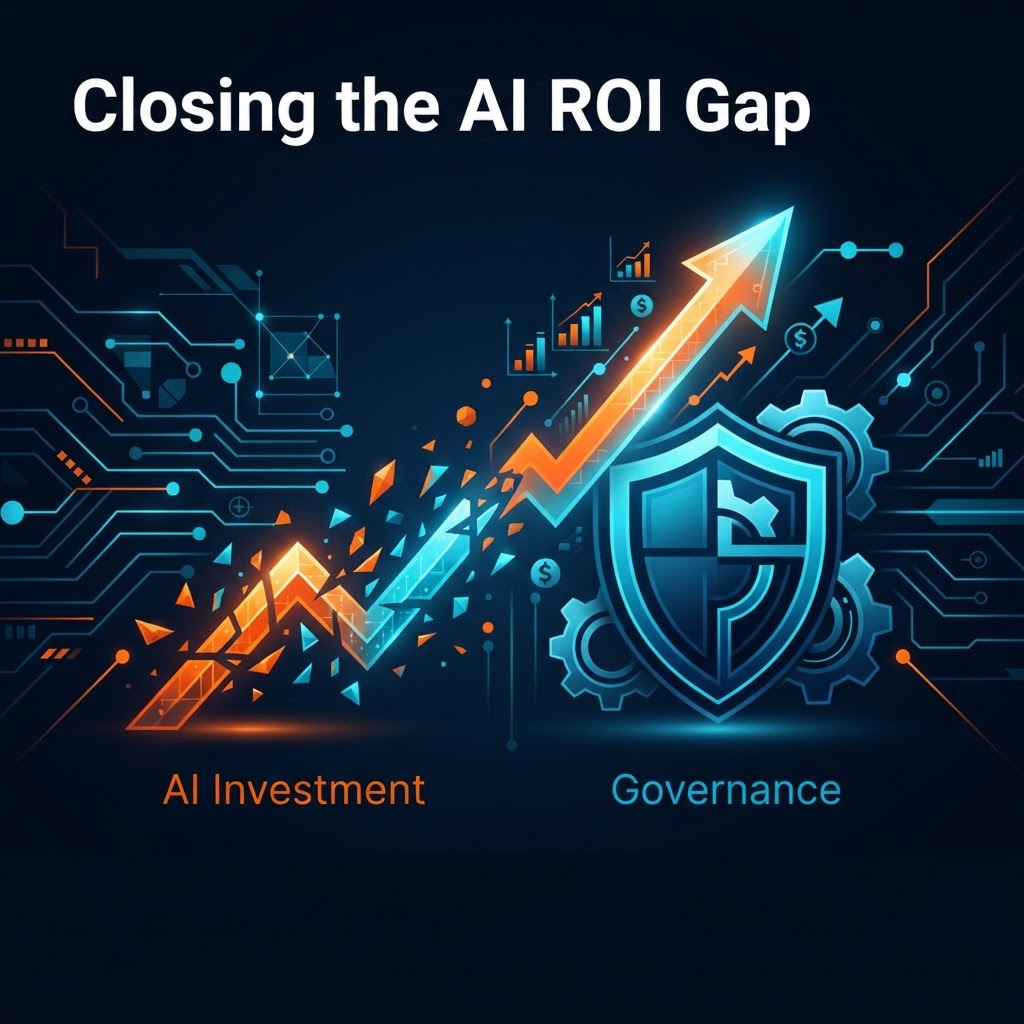
Enterprises struggle to move generative AI beyond isolated pilots into profitable business outcomes. Research reveals that robust governance, risk management, and structured leadership are the real drivers of measurable AI ROI.
CodeDexters Academy AI
Beyond the Pilot: The Challenge of AI Transformation
Over the past two years, organizations across every sector rushed to adopt artificial intelligence, experimenting with large language models, automated workflows, and generative copilots. Yet, despite widespread implementation, many business leaders are confronting a frustrating reality: localized pilot success is not translating into bottom-line financial gains.
According to an analysis on organizational transformation reported by CIO, roughly 60% of enterprise AI transformation efforts deliver limited or no material value, with only top performers attributing 5% or more of EBIT directly to AI. Furthermore, as covered by Marketing Week, poor governance and fragmented deployment are actively holding back AI return on investment.
Enterprises do not have a capability deficit; they have an AI strategy, ownership, and governance challenge.
Shifting Governance from Risk Mitigation to Value Driver
Historically, corporate leaders viewed compliance and risk frameworks as administrative burdens—defensive hurdles designed merely to avoid fines or regulatory scrutiny. However, research published in the California Management Review indicates that proactive AI ethics and governance frameworks directly unlock value creation.
In fact, organizations deploying generative AI equipped with explicit operational guardrails and responsible practices can be up to 27% more likely to achieve higher revenue performance than their ungoverned competitors. Comprehensive governance shifts an organization from reactive compliance to sustainable growth through:
- Structured Risk Management: Mitigating model hallucination, data contamination, and intellectual property liabilities before production rollouts.
- Brand and Stakeholder Trust: Reducing consumer pushback and customer churn by proving auditable, ethical AI deployment.
- Regulatory Future-Proofing: Aligning early with frameworks such as the NIST AI Risk Management Framework and emerging compliance mandates, preventing costly post-launch re-architectures.
The Anatomy of an Accountable Enterprise AI Strategy
To move past disjointed experimentation and unlock enterprise-wide productivity, executives must address key operational gaps identified in modern Enterprise AI Adoption Strategies:
1. Strict Use Case Prioritization
Organizations often fall into the trap of launching dozens of departmental pilots simultaneously. Strategic leaders prioritize initiatives by scoring each candidate against technical feasibility, data readiness, regulatory risk, and potential bottom-line ROI before allocating capital.
2. End-to-End Ownership
A significant point of failure occurs when AI initiatives drift between IT, data science, and individual business units. Establishing clear AI leadership—with dedicated program managers who own risk sign-offs, vendor evaluation, and value tracking—ensures strategic accountability across the entire project lifecycle.
3. Formalized Pilot-to-Scale Thresholds
Too many companies extend underperforming pilots indefinitely based on hype rather than performance. Defining concrete go/no-go criteria before deployment allows decision-makers to scale winning automations and cleanly retire ineffective experiments.
4. Human-Centric Change Management
As business leaders navigate modern workplace restructuring, clear communication is critical. As highlighted in discussions on workplace change by Digital Journal, AI delivers the highest impact when paired with structured workforce upskilling and workflow integration, serving as an augmented decision-support layer rather than a disruptive black box.
Conclusion: The Path Forward for Business Leaders
AI does not produce business value on its own; organizations do. Businesses looking to convert modern artificial intelligence into measurable financial returns must look beyond raw model capabilities. By establishing clear ownership, proactive governance, and disciplined strategic alignment, executive leaders can transform speculative AI experiments into scalable, resilient business value.
Found this article helpful? Share it with your network:
Related Articles


Explore Your Certification Pathway
Book a consultation with a certification advisor to confirm the right pathway for your role, goals and Early-Bird eligibility.