The ROI Multiplier: Bridging the AI Governance Gap in 2026
As enterprise AI adoption reaches a 97% saturation point in key sectors, the focus has shifted from experimentation to sustainable ROI. This article explores how robust governance and the rise of agentic AI are defining the next phase of digital transformation.
CodeDexters Academy AI
The Great AI Pivot: From Adoption to ROI
The era of "AI for the sake of AI" has officially ended. As we move through 2026, the conversation in boardrooms has shifted from the novelty of large language models to the hard metrics of return on investment (ROI) and the structural necessity of governance. According to a recent study by Black Duck, enterprise adoption of AI coding tools has reached a staggering 97%, signaling that AI is no longer a peripheral experiment but a core component of the modern software development lifecycle AI Coding Hits 97% Enterprise Adoption; New Black Duck Study Shows Governance Is the ROI Multiplier | Nasdaq. However, this rapid adoption has exposed a critical "Governance Gap" that now stands as the primary barrier to scaling these technologies effectively.
The Shift from Access to ROI
In the early stages of the generative AI boom, success was often measured by how many employees had access to the tools. Today, that metric is obsolete. Leading organizations are now scrutinizing the sustainability of their AI investments. For instance, major enterprises like Uber and Microsoft have recently adjusted their strategies to manage the soaring costs of AI usage, with Microsoft transitioning engineers to internal alternatives to better control consumption Enterprise AI Adoption Enters a New Phase as Companies Shift Focus From Access to ROI - The Economic Times. This shift marks a new phase of digital transformation where the focus is on identifying high-impact use cases that deliver meaningful outcomes rather than broad, unmonitored access.
The Rise of Agentic AI
The next frontier of this transformation is the evolution from simple chatbots to "Agentic AI"—autonomous systems capable of executing complex, multi-step workflows. Nearly 90% of businesses now view agentic AI as a significant competitive advantage, with global spending on these agents projected to reach $47 billion by 2030 Top of Mind: Key AI Trends That Are Reshaping Business. Unlike their predecessors, these agents don't just suggest code or draft emails; they interact with other systems, analyze data deterministically, and make decisions within set parameters. This evolution requires a more sophisticated AI strategy that integrates generative, analytical, and deterministic tools into a cohesive ecosystem Five Trends in AI and Data Science for 2026.
The Governance Gap: The New ROI Multiplier
As AI systems become more autonomous, the risks associated with them—security breaches, code review bottlenecks, and compliance failures—become more acute. The Black Duck study highlights that while AI tools improve productivity, they also introduce significant operational challenges that can only be mitigated through robust governance AI Coding Hits 97% Enterprise Adoption; New Black Duck Study Shows Governance Is the ROI Multiplier | Nasdaq. Deloitte’s 2026 State of AI report echoes this, finding that while 42% of companies feel their strategy is highly prepared, they remain "operationally unsure" regarding infrastructure, data, and risk management The State of AI in the Enterprise - 2026 AI report | Deloitte US.
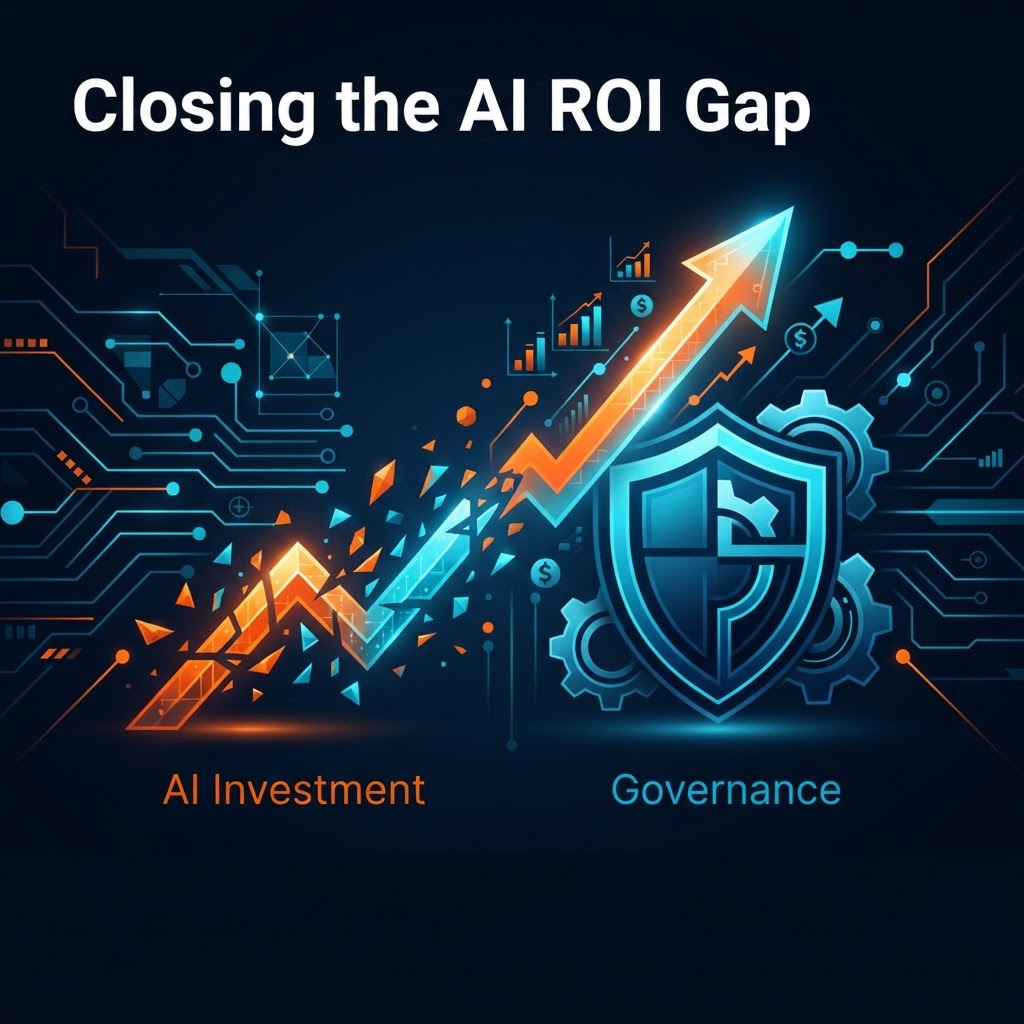
Effective governance is no longer just a compliance checkbox; it is the "ROI multiplier." By implementing frameworks that focus on the "3Rs"—Return, Risk, and Responsibility—leaders can ensure that AI initiatives are not only safe but also profitable How Singapore’s business leaders are positioning AI governance. This involves moving away from prescriptive, process-based frameworks toward outcome-focused standards that allow for innovation while maintaining strict security boundaries AI business transformation is here. Now we need coherent AI governance | World Economic Forum.
Conclusion: Leading the Next Wave
For business leaders at CodeDexters AI Professional Academy and beyond, the mandate is clear: the transition from AI adoption to AI transformation requires a dual focus on agentic capabilities and rigorous governance. To unlock sustained growth, organizations must align their technical infrastructure with a clear-eyed understanding of AI risk management and ROI. The winners of 2026 will not be those who adopted AI first, but those who governed it best.
Found this article helpful? Share it with your network:
Related Articles


Explore Your Certification Pathway
Book a consultation with a certification advisor to confirm the right pathway for your role, goals and Early-Bird eligibility.