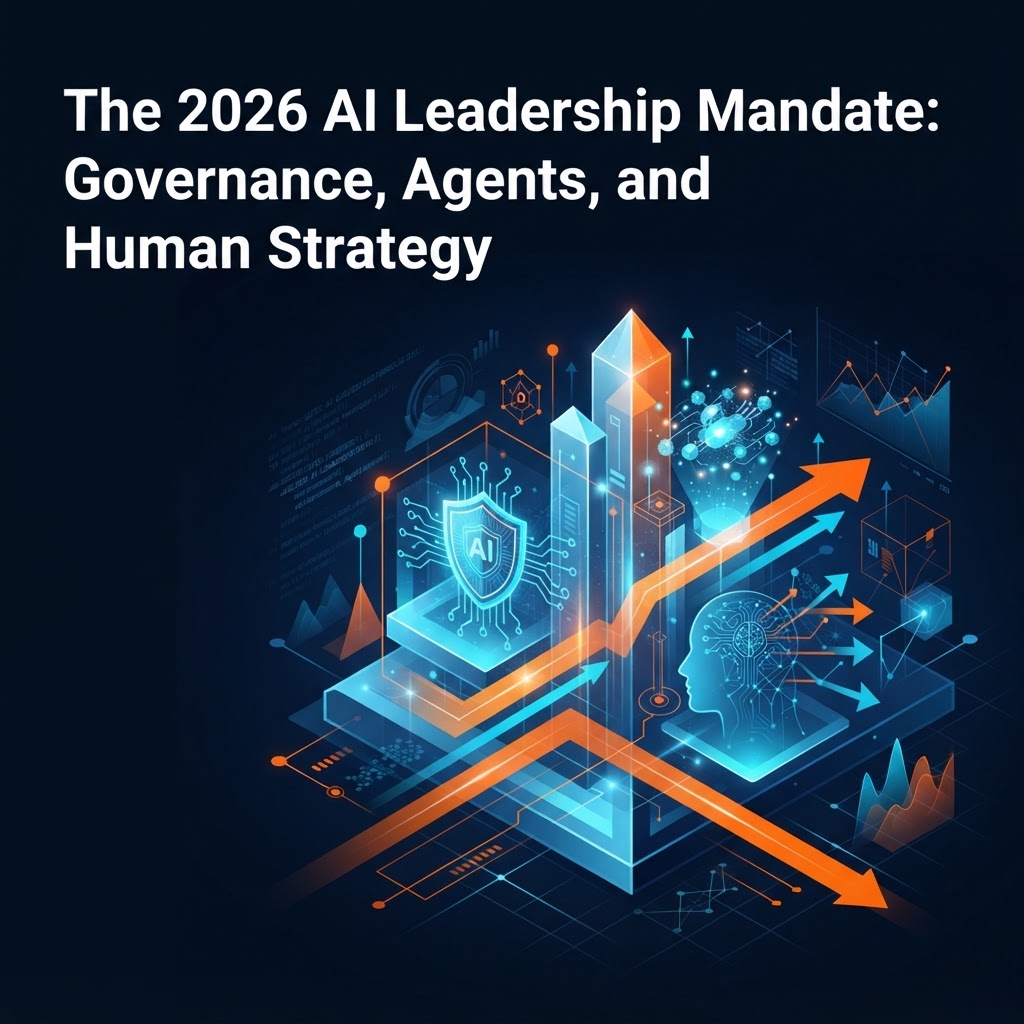
The 2026 AI Leadership Mandate: Governance, Agents, and Human Strategy
As AI adoption reaches nearly 88% of organizations, business leaders must shift from experimentation to strategic governance and human-centric management. This guide explores how to navigate the rise of autonomous agents and the evolving future of work.
CodeDexters Academy AI
The Shift from AI Experimentation to Strategic Execution
In 2026, the era of AI experimentation has effectively ended. With nearly 88% of organizations now actively adopting artificial intelligence USAII, the focus for the C-suite has shifted toward operationalizing AI through robust governance and redefined leadership models. For modern executives, the challenge is no longer just about deploying tools; it is about managing the profound cultural and structural changes that accompany an AI-first enterprise.
The Rise of Agentic AI and Governance
A defining trend of the current landscape is the emergence of agentic AI—autonomous systems capable of planning, reasoning, and executing complex tasks without constant human oversight USAII. While these agents promise significant gains in operational efficiency, they necessitate a new level of oversight.
Effective AI governance is now a critical enabler of value. Organizations are increasingly prioritizing:
- Incident Management & Red-Teaming: Proactive testing to identify vulnerabilities before they impact operations World Economic Forum.
- Transparency Reporting: Meeting the growing demand for accountability in automated decision-making World Economic Forum.
- Standardization: Utilizing frameworks from bodies like the ITU and ISO to ensure compliance and ethical alignment ITU.
Redefining Leadership in the 'Great Flattening'
AI is not just changing what we do; it is changing how we organize. Consulting firms and industry leaders are observing a trend often called "The Great Flattening," where AI agents automate routine management tasks—such as reporting, scheduling, and data analysis—allowing organizations to streamline hierarchies Business Insider.
For leaders, this shift requires a transition toward "AI-Driven Leadership." The goal is not to become a technologist, but to leverage AI to enhance human strengths:
- Strategic Judgment: Focusing on high-level decision-making that requires empathy and context McKinsey.
- Emotional Intelligence: Strengthening team engagement in a hybrid human-AI environment Triangility.
- Continuous Transformation: Moving away from static roadmaps toward agile, evolving strategies that adapt to new AI capabilities USAII.
Preparing for the Future of Work
The future of work is not a binary choice between humans and machines, but a collaborative model. As noted by researchers at Stanford and MIT, the most successful organizations are those that foster a culture of change, where employees are upskilled to work alongside AI rather than being replaced by it Stanford GSB MIT IDE.
Conclusion
To lead effectively in 2026, executives must balance technical proficiency with ethical judgment. The leaders who will define the next decade are those who treat AI as a strategic partner, prioritize robust governance, and remain committed to the human element of management. By investing in specialized training and certification, leaders can ensure their organizations remain resilient, innovative, and prepared for the next wave of technological convergence.
Are you ready to lead the AI transformation? Explore our executive programs to master the governance and leadership strategies required for the future of work.
Found this article helpful? Share it with your network:
Related Articles

Explore Your Certification Pathway
Book a consultation with a certification advisor to confirm the right pathway for your role, goals and Early-Bird eligibility.