Executive Leadership in the Age of AI: Navigating Governance and Growth
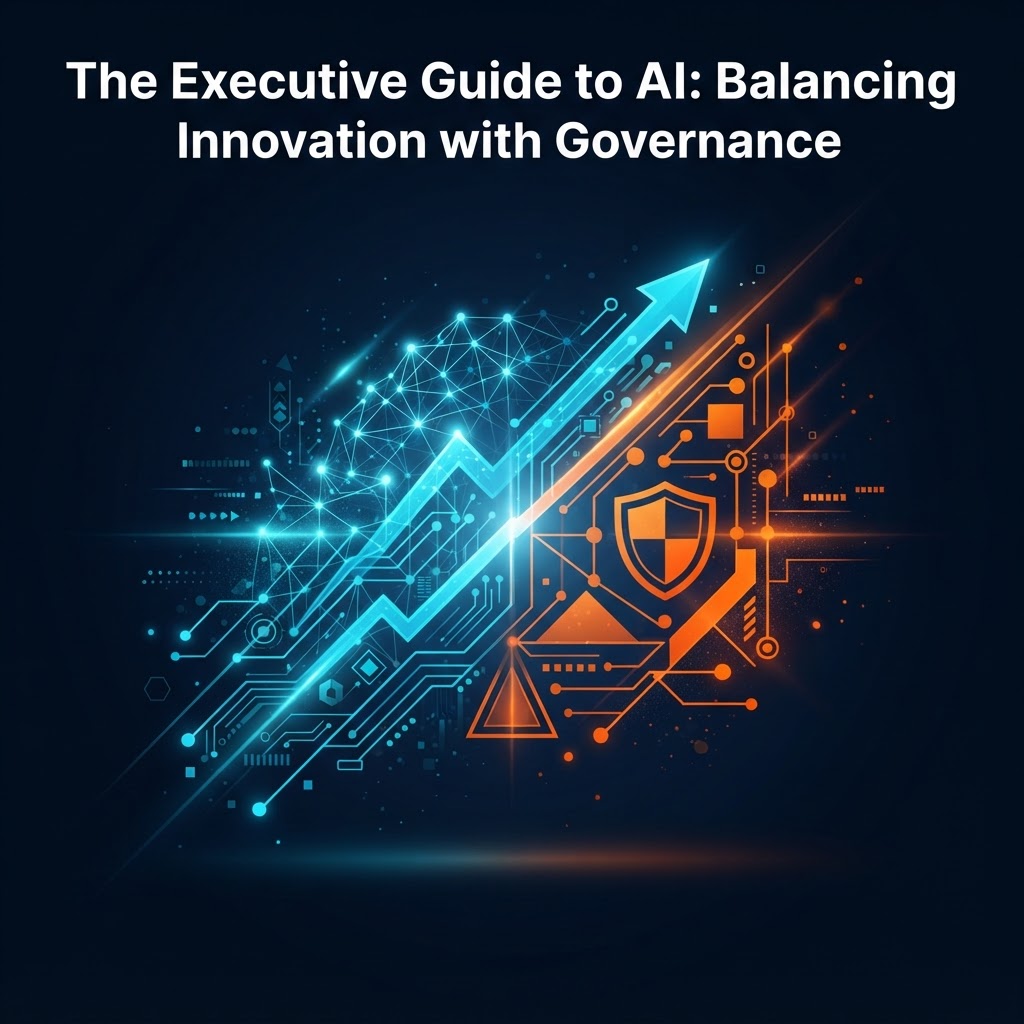
As AI evolves from a simple automation tool to a strategic partner, business leaders must pivot toward real-time governance and human-centric workforce strategies. This brief explores how modern executives can balance innovation with compliance to secure a competitive future.
CodeDexters Academy AI
The New Mandate for AI Leadership
In the current business landscape, the role of the executive is undergoing a profound transformation. AI is no longer just a technical implementation; it is a fundamental shift in how organizations operate, innovate, and compete. As we move into 2026, the focus for leadership has shifted from mere adoption to strategic integration and rigorous oversight.
From Automation to Strategic Partnership
Recent industry insights suggest that the most successful companies are moving beyond using AI solely for cost-cutting or task automation. Instead, forward-thinking leaders are leveraging AI to reinvent business models and empower their workforce. By automating routine tasks, organizations are elevating the importance of uniquely human contributions—such as critical thinking, emotional intelligence, and creative problem-solving. This shift requires a new type of leadership that prioritizes human-AI collaboration over simple replacement.
The Evolution of AI Governance
As AI capabilities expand, so do the risks. With the full implementation of the EU AI Act and the rise of autonomous agents, governance has moved from static policy documents to real-time oversight. Modern AI governance now requires:
- Runtime Monitoring: Continuous oversight of data flows and decision paths.
- Human-in-the-Loop Checkpoints: Mandatory human review for high-risk actions, such as financial transactions or production code changes.
- Risk Tiering: Aligning internal practices with global regulatory frameworks to ensure compliance and mitigate algorithmic bias.
Preparing for the Future of Work
As 76% of professionals report using AI in some capacity, the future of work is already here. Executives must now focus on upskilling their teams to work alongside AI agents. The goal is to transform the workforce into a more agile, productive unit where AI handles the heavy lifting of data processing, allowing employees to focus on high-value strategic initiatives.
Conclusion
For today’s executives, the challenge is twofold: fostering an environment of rapid innovation while maintaining a robust, compliant governance framework. By embracing real-time oversight and investing in human-centric AI strategies, leaders can ensure their organizations remain resilient and competitive in an increasingly automated world. At CodeDexters AI Professional Academy, we believe that informed leadership is the most critical asset in the AI-driven enterprise.
Found this article helpful? Share it with your network:
Related Articles

Explore Your Certification Pathway
Book a consultation with a certification advisor to confirm the right pathway for your role, goals and Early-Bird eligibility.