AI Governance 2024: Turning Compliance into Strategic Advantage
The enforcement of the EU AI Act marks a new era for global business leadership. Discover how proactive AI governance and compliance can bridge the gap between AI experimentation and sustainable ROI.
CodeDexters Academy AI
AI Governance 2024: Turning Compliance into Strategic Advantage
The honeymoon phase of experimental Artificial Intelligence (AI) has officially ended. For the past eighteen months, enterprises have been caught in a whirlwind of pilot programs and proof-of-concepts, largely testing the boundaries of Generative AI. However, as we move into the latter half of 2024, the narrative has shifted from "what is possible" to "what is sustainable."
The catalyst for this transformation is the formal entry into force of the EU AI Act on August 1, 2024. As the world’s first comprehensive horizontal legal framework for AI, it is not merely a European regulation; it is the new global benchmark for AI Governance. At CodeDexters AI Professional Academy, we believe this marks a fundamental pivot in how business leaders must approach Digital Transformation.
The "Brussels Effect" on Global AI Strategy
Much like the GDPR redefined data privacy, the EU AI Act is setting the "Brussels Effect" in motion. Any business—regardless of its headquarters—that provides or deploys AI systems within the EU market must comply with these stringent new rules. For leadership teams, this means AI Strategy can no longer be siloed within IT departments; it must be a core component of legal, ethical, and operational risk management.
The Act introduces a risk-based classification system, categorizing AI into four levels: Unacceptable, High-Risk, Limited, and Minimal. By February 2025, systems deemed to pose "unacceptable risks"—such as certain biometric surveillance or social scoring tools—must be phased out. High-risk applications in sectors like HR, finance, and education will face rigorous oversight. For the modern professional, understanding these categories is the first step toward building a resilient AI roadmap.
Bridging the Gap: From Compliance to AI ROI
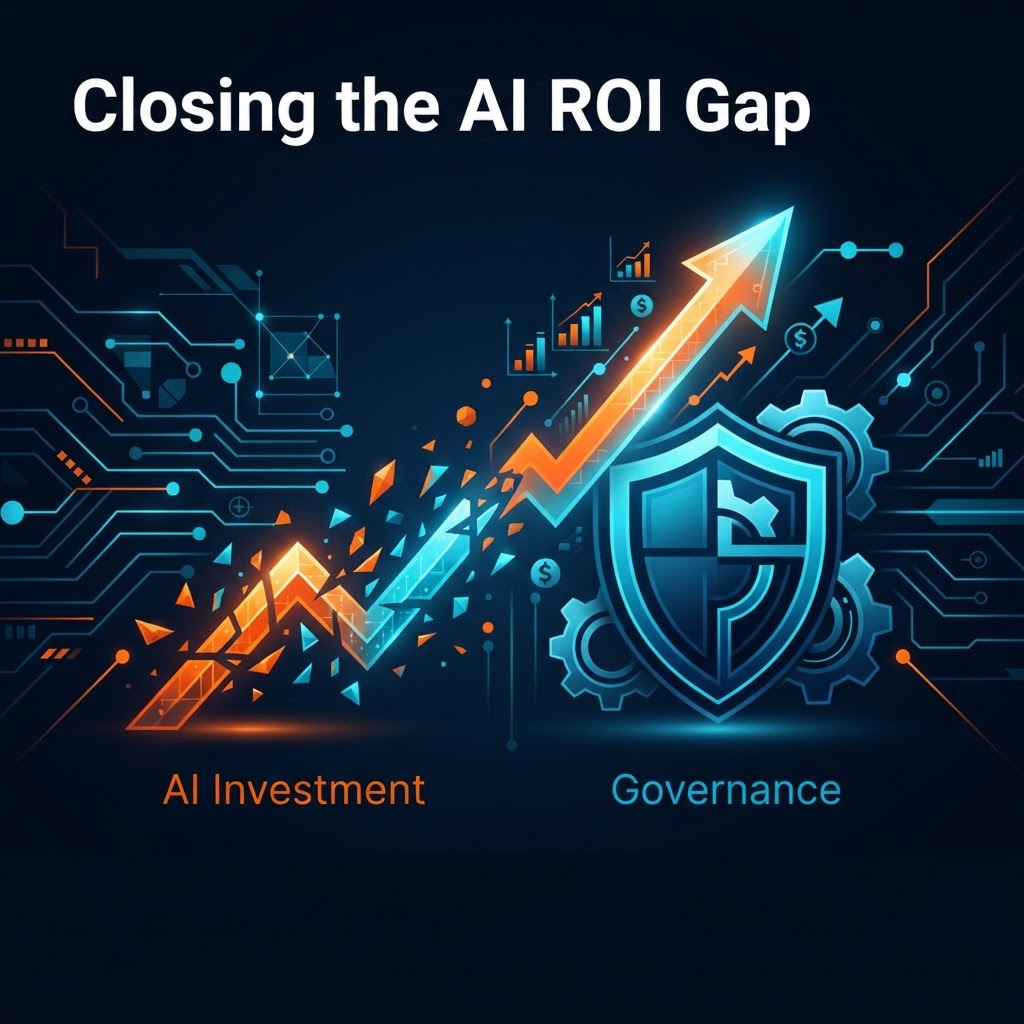
A common misconception among C-suite executives is that AI Compliance is a cost center or a bureaucratic hurdle. In reality, recent data from BCG and Deloitte suggests that companies with robust AI Governance frameworks are significantly more likely to scale their AI solutions successfully.
Currently, while over 70% of companies have launched AI initiatives, only about 26% have managed to move beyond the pilot phase to generate tangible value. The primary barrier? A lack of trust and clarity. By implementing a standardized governance model, businesses can:
- Eliminate Shadow AI: Reduce the risks associated with employees using unvetted, insecure AI tools that could leak proprietary data.
- Improve Data Integrity: Governance ensures that the data fueling AI models is accurate, unbiased, and legally compliant, leading to more reliable outputs.
- Accelerate Adoption: When employees understand the guardrails, they are more confident in integrating AI into their daily workflows, directly boosting AI Productivity.
AI Risk Management as a Competitive Edge
In the new regulatory landscape, AI Risk Management is becoming a competitive differentiator. Organizations that wait for enforcement deadlines to act will find themselves in a reactive, high-cost scramble. Conversely, leaders who integrate transparency and accountability into their AI Business Cases from day one are finding it easier to attract investment and build customer trust.
Strategic risk management now requires a holistic approach that includes:
- Data Lineage Audits: Ensuring all training data complies with copyright and privacy laws.
- Human-in-the-Loop (HITL) Protocols: Maintaining human oversight for high-stakes automated decisions in finance and recruitment.
- Continuous Monitoring: Recognizing that AI models can "drift" or become biased over time, requiring ongoing technical and ethical audits.
The Call for AI Leadership
As we navigate this transition, the demand for sophisticated AI Leadership has never been higher. Digital Transformation in 2024 is no longer just about adopting the latest software; it is about fostering an organizational culture that values "Responsible AI." Leaders must bridge the gap between technical developers and compliance officers to ensure that AI Automation aligns with the organization's long-term values.
At CodeDexters AI Professional Academy, we emphasize that the most successful professionals in this era will be those who treat compliance not as a checklist, but as a framework for innovation. The goal is to move beyond the hype and toward a disciplined, value-driven approach where AI is both powerful and protected.
Conclusion: The Path Forward
The implementation of the EU AI Act is the ultimate test of a modern business’s agility. Companies that view these regulations as a burden will inevitably fall behind. However, those that embrace AI Governance as a strategic pillar will build the necessary foundation for sustainable, long-term ROI. As we look toward 2025, the message is clear: the future of business belongs to those who lead with responsibility, strategy, and a commitment to ethical AI.
Found this article helpful? Share it with your network:
Related Articles


Explore Your Certification Pathway
Book a consultation with a certification advisor to confirm the right pathway for your role, goals and Early-Bird eligibility.